
Your first 48 hours
Day 1: Landing
- ArriveThe red metro line leaves from Terminal 1 and reaches the Baixa in about 30 minutes, with one change. Book a transfer if you land after 23:30.
- 16:00Walk from Praça do Comércio up through Alfama to the Miradouro de Santa Luzia, then on to the castle walls for the late light.
- 20:30Dinner and fado in Alfama. Book a table: in a proper fado house, the singers perform between courses and the room goes silent.
Day 2: Belém and the Bairro Alto
- 10:00Jerónimos Monastery on a morning slot, then a warm custard tart at Pastéis de Belém, two doors away.
- 12:30The Belém Tower on its 30-minute slot, then the riverside walk back past the Padrão dos Descobrimentos.
- 18:30Sunset at the Miradouro de São Pedro de Alcântara, then dinner in the Bairro Alto or Príncipe Real.
Getting in and around
Humberto Delgado airport sits inside the city, about 7 km north of the Baixa. The metro is the cheapest way in. The red line starts at Aeroporto station, outside Terminal 1 arrivals; change at Alameda for the green line to Rossio, Baixa-Chiado and Cais do Sodré, or ride to the end at São Sebastião for the blue line to Avenida da Liberdade. Allow about 30 minutes to the Baixa. Trains run from 06:30 to 01:00. If you land at Terminal 2, used by some low-cost airlines, take the free shuttle bus to Terminal 1 first.
A metro and Carris single costs €1.90 in 2026, loaded on a reusable Navegante occasional card (€0.50) from the machines. It covers one journey of up to an hour, changing between metro, buses and trams. Load the card with “zapping” credit instead (from €3) and a metro ride drops to €1.72; the same credit works on the trains to Sintra and Cascais. You can also tap a contactless bank card at the metro gates, at €1.92 a ride.
Taxis wait outside arrivals and run on the meter, and Uber and Bolt also work the airport. Outside rush hour, the ride to the Baixa takes about 20 minutes.
In town, walk, and wear shoes with grip: the hills are steep and the white limestone paving (calçada) turns slick in the rain. The 24-hour Carris/Metro ticket costs €7.25 and pays off after four rides. Paying on board costs more: €3.30 for a tram, €2.30 for a bus. The Glória funicular has been closed since it derailed on 3 September 2025, killing 16 people, and is not expected back before 2029. Other funiculars were suspended for inspections after the crash, so check carris.pt before you plan a ride on the Bica or the Lavra.
Ferries cross the Tagus from Cais do Sodré to Cacilhas in about ten minutes. Suburban trains leave Rossio for Sintra and Cais do Sodré for Cascais, each about 40 minutes away.
Things to book
The Belém sights and Pena Palace run on timed slots, and the best fado houses have a few dozen seats. Book Pena and Belém as soon as your dates are fixed, fado a few days ahead.
Pena Palace and Park ticket with timed palace entry
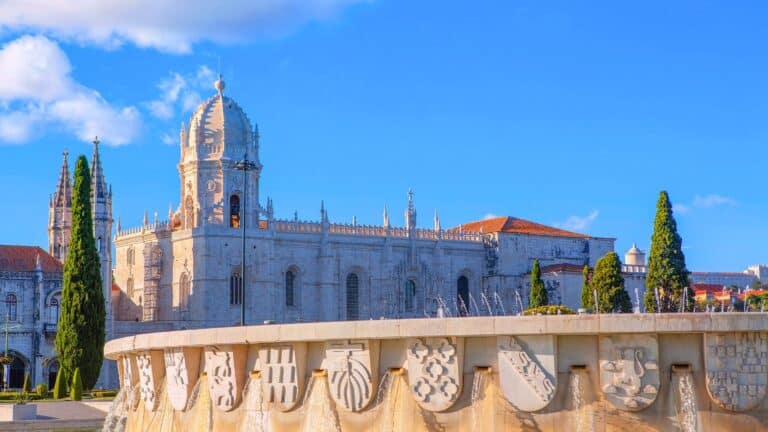
Jerónimos Monastery timed entry ticket
Belém Tower timed entry ticket
Fado show in Alfama
Sintra day trip from Lisbon with Pena Palace
Sunset sailing trip on the Tagus
Neighbourhoods at a glance
Baixa. The flat grid rebuilt after the earthquake of 1755, between Rossio and Praça do Comércio. Shops, cafés and metro stations, but quiet and a little empty after dark.
Alfama. The oldest quarter, a tangle of stairs and lanes under the castle that the earthquake spared. Fado houses, laundry on the balconies and the best viewpoints over the river. Steep, and hard work with a suitcase.
Chiado and the Bairro Alto. Chiado is the elegant part: theatres, old cafés and the Bertrand bookshop, open since 1732. The Bairro Alto next door is a grid of small bars, sleepy by day, packed with people drinking in the street after 22:00.
Príncipe Real. Ten minutes uphill from the Bairro Alto: a garden square shaded by a giant cedar, concept stores in old mansions and some of the city’s best restaurants. Calm at night.
Cais do Sodré. The riverside station for Cascais trains and the Cacilhas ferry, with the Time Out Market and the late bars of Pink Street (Rua Nova do Carvalho).
Belém. Six kilometres west along the river: the monastery, the tower, the custard tarts and the MAAT museum. Wide, green and far from the nightlife.
What to eat
Pastel de nata. The custard tart, best warm with cinnamon on top. Pastéis de Belém has baked its own version since 1837; Manteigaria in Chiado bakes all day within sight of the counter.
Bacalhau. Salt cod, said to come in a different recipe for every day of the year. Start with bacalhau à Brás: shredded cod with egg and matchstick potatoes.
Grilled sardines. A summer dish, at its best in June, when the Santo António street parties grill them on every corner of Alfama and Mouraria.
Bifana. Thin pork steak simmered in garlic and wine, in a soft roll with mustard. A standing lunch in a counter bar for a few euros.
Seafood in a cervejaria. Beer halls such as Cervejaria Ramiro sell prawns, clams and crab by weight, and finish with a steak sandwich (prego) for dessert.
Ginjinha. Sour cherry liqueur, drunk in one go at the counter of A Ginjinha on Largo de São Domingos, open since 1840. Lunch runs from about 12:30 to 15:00; dinner starts around 20:00.
More in What to eat in Lisbon, and for a day by the sea, the beaches near Lisbon.
Day trips from Lisbon
Sintra
Cascais
Cacilhas and Cristo Rei
Where to stay
Stay between the Baixa and Príncipe Real for a first visit: the metro from the airport, the trams and the Sintra and Cascais trains all start within a short walk.
Baixa
Chiado
Alfama
Príncipe Real
When to go
- JanQuiet
- FebQuiet
- MarGood
- AprBest
- MayBest
- JunBest
- JulBusy
- AugBusy
- SepBest
- OctGood
- NovQuiet
- DecQuiet
April to June and September are the sweet spot: warm days, cool evenings and terraces open late. June belongs to Santo António, with street parties every night and the big one on 12 June, when the city stays up for sardines and processions. July and August are hot, often above 30 °C, and the most expensive months. October is still mild. From November to February it rains more, but days stay around 15 °C and the queues at Belém and Sintra are short. The Atlantic stays cool even in August, so a swim at Cascais is bracing.
Money, safety and etiquette
Money. Portugal uses the euro, and cards work almost everywhere. Small family restaurants (tascas) sometimes take cash only. Tipping is not expected: round up, or leave 5 to 10% for good service.
Tourist tax. Lisbon charges €4 per person per night, from age 13 and for up to seven nights (€28 at most), paid at your hotel or apartment. The rate doubled in September 2024.
The couvert. Bread, olives, butter and cheese placed on your table before you order are not free. Each item you touch goes on the bill; send back what you do not want.
Known scams. Men in the Baixa and the Bairro Alto mutter offers of hashish or cocaine. What they sell is usually bay leaves or flour: keep walking. Pickpockets work tram 28, the Martim Moniz queue and the crowds at the viewpoints.
Borders. Since April 2026, the EU Entry/Exit System takes the fingerprints and a photo of non-EU visitors, British travellers included, at their first entry. ETIAS, the online travel authorisation, was still not in operation in November 2026.
- Belém on morning slots. The monastery and the tower before the coach groups, then tarts at Pastéis de Belém.
- Sunset at a miradouro. São Pedro de Alcântara or the Graça viewpoint, with a drink from the kiosk.
- Sintra on a weekday. An early train from Rossio, and Pena on the first timed slot.
- The tram 28 queue at Martim Moniz. Board further along the line, or ride it early in the morning.
- Restaurants with touts on Rua Augusta. Walk two streets uphill into Chiado or Alfama.
- Driving to Sintra. Private cars cannot reach Pena Palace, and parking in town is scarce.
